
The Evolving Role of Natural Gas Power Generation in Europe’s Energy Transition
Introduction
Europe’s energy sector is undergoing a profound transformation as countries pursue ambitious decarbonization targets, expand renewable energy capacity, and strengthen energy security. Wind and solar power are becoming the cornerstone of the continent’s electricity system, helping reduce greenhouse gas emissions and dependence on imported fossil fuels. However, despite the rapid growth of renewables, natural gas continues to play a crucial role in maintaining grid stability and ensuring reliable power supply.
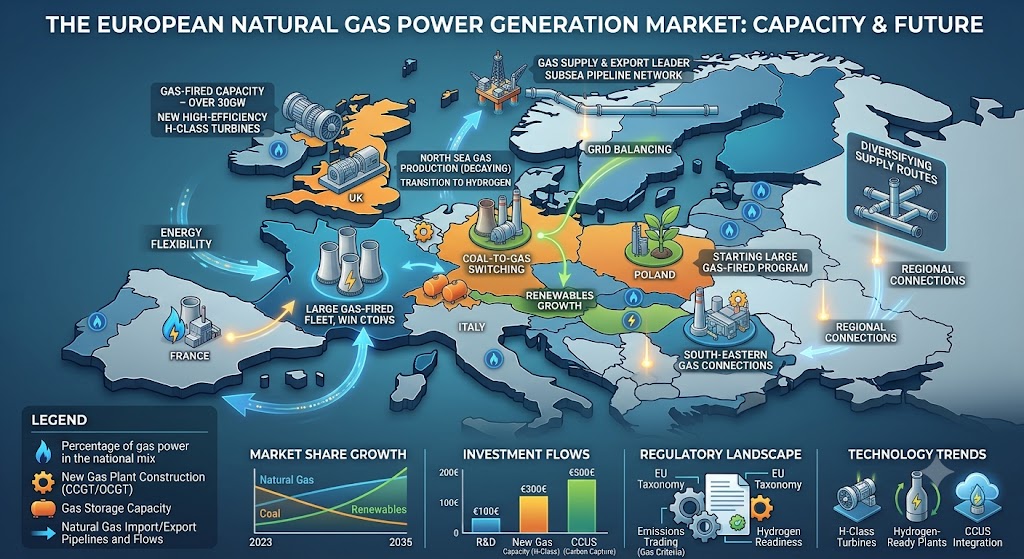
The role of natural gas in Europe is evolving from that of a primary baseload generation source to a flexible balancing resource that complements intermittent renewable energy. As the continent transitions toward a cleaner energy future, natural gas power plants are increasingly being used to provide backup generation, support grid reliability, and facilitate the integration of large-scale renewable energy. This changing role is reshaping investment strategies, market dynamics, and long-term energy planning across Europe.
Natural Gas as a Bridge Fuel in the Energy Transition
Natural gas has long been viewed as a transition fuel between high-carbon energy sources such as coal and a future dominated by renewable energy. Compared to coal-fired power plants, natural gas generation produces significantly lower carbon dioxide emissions and offers greater operational flexibility.
Over the past decade, many European countries have reduced coal generation and replaced it with natural gas capacity to meet emissions reduction targets. This shift has helped lower carbon intensity while ensuring that electricity systems remain reliable during periods of growing renewable deployment.
As Europe continues its transition toward net-zero emissions, natural gas is expected to remain an important component of the energy mix, particularly during the period when renewable energy and storage technologies are still scaling up.
Supporting Renewable Energy Integration
One of the most important roles of natural gas power generation today is supporting renewable energy integration. Wind and solar resources are inherently variable, meaning electricity production depends on weather conditions and time of day. These fluctuations create challenges for grid operators who must continuously balance electricity supply and demand.
Natural gas power plants offer rapid ramping capabilities that allow them to increase or decrease output quickly in response to changes in renewable generation. This flexibility makes gas-fired plants particularly valuable during periods of low wind speeds, reduced solar output, or unexpected spikes in electricity demand.
By providing dispatchable generation capacity, natural gas helps maintain grid stability and ensures reliable electricity supply while Europe continues expanding renewable energy infrastructure.
The Rise of Flexible Gas Generation
The future role of natural gas in Europe is increasingly centered on flexibility rather than continuous baseload generation. As renewable penetration rises, electricity markets require power plants that can respond quickly to changing grid conditions.
Modern combined-cycle gas turbine (CCGT) plants and open-cycle gas turbine (OCGT) facilities are being optimized for flexible operation. These plants can start up rapidly, adjust output efficiently, and provide ancillary services such as frequency regulation and reserve capacity.
This operational flexibility is becoming increasingly valuable as power systems incorporate larger shares of variable renewable energy. Rather than competing directly with renewables, gas generation is evolving into a complementary technology that supports overall system reliability.
Decarbonizing Natural Gas Through Hydrogen and CCS
While natural gas remains important, Europe’s long-term climate goals require significant reductions in emissions from gas-fired generation. As a result, new technologies are emerging to reduce the carbon footprint of natural gas power plants.
One promising pathway involves blending hydrogen with natural gas in existing power generation infrastructure. Green hydrogen produced from renewable electricity can partially replace natural gas fuel, reducing emissions while utilizing existing assets.
Another important solution is Carbon Capture and Storage (CCS), which captures carbon dioxide emissions from power plants and stores them underground. CCS technologies have the potential to enable low-carbon gas generation while supporting grid reliability and industrial decarbonization efforts.
Together, hydrogen integration and CCS are expected to play a key role in extending the viability of natural gas generation within a net-zero energy system.
Market Drivers and Investment Trends
Several factors are influencing investment decisions within Europe natural gas power generation market. Rising renewable energy penetration is increasing demand for flexible generation resources capable of balancing the grid. At the same time, policymakers are emphasizing energy security and system reliability amid evolving geopolitical conditions.
Investments are increasingly focused on highly efficient gas plants, hydrogen-ready infrastructure, and low-carbon generation technologies. Energy companies are also exploring hybrid projects that combine gas generation with battery energy storage systems to improve operational flexibility and reduce emissions.
As Europe advances toward decarbonization, future investments are expected to prioritize assets that can adapt to changing regulatory and market requirements.
Challenges Facing the Natural Gas Sector
Despite its continued importance, the natural gas sector faces several challenges. The European Union’s climate policies aim to significantly reduce fossil fuel consumption over the coming decades, creating uncertainty regarding long-term demand.
Carbon pricing mechanisms under the EU Emissions Trading System (ETS) are increasing operating costs for gas-fired power plants. In addition, growing competition from renewable energy and energy storage technologies is gradually reducing the market share of conventional generation.
Volatile fuel prices and concerns about import dependence also present risks for investors and operators. To remain relevant, the natural gas industry must continue improving efficiency and investing in low-carbon solutions.
Future Outlook: From Transitional Fuel to Flexible Low-Carbon Resource
The future of natural gas power generation in Europe will be defined by its ability to support a renewable-dominated energy system while reducing emissions. Although the share of gas in the overall energy mix is expected to decline over time, its role as a provider of flexibility, reliability, and backup capacity will remain essential for decades.
Hydrogen-ready power plants, CCS-enabled facilities, and hybrid energy systems are expected to shape the next phase of the market. These innovations will allow natural gas infrastructure to contribute to energy security and grid stability while aligning with Europe’s climate objectives.
Conclusion
Natural gas power generation is undergoing a significant transformation within Europe’s energy transition. Rather than serving as a traditional baseload power source, it is increasingly acting as a flexible balancing resource that supports renewable energy integration and grid reliability.
While challenges related to decarbonization, regulation, and market competition remain, natural gas continues to play a vital role in ensuring a stable and secure energy supply. Through investments in hydrogen, carbon capture, and flexible generation technologies, the sector is positioning itself to remain an important component of Europe’s evolving energy landscape.