
EU Depot & Corridor EV Charging Market 2026–2030: Grid-Connection Reality, Utilization Risk, and the Bankability Gap Between “Installed” and “Investable” Capacity
Report Description
The EU Depot & Corridor EV Charging Market 2026–2030 is moving into a phase where investor outcomes are shaped less by charger hardware rollouts and more by the gap between power that is contractually “promised” and power that is actually delivered, energized, and economically usable. As grid connection queues lengthen and transformer lead times stay stubbo
, capital shifts toward sites and operators that can prove connection readiness, predictable utilization ramps, and controllable demand-charge exposure, because that is what keeps DSCR inside comfort bands when charging load is still lumpy.
Mainstream market views often over-weight public targets and connector counts, then under-weight the parts that break underwriting in practice: power availability at the meter, curtailment or phased connections, depot load profiles that spike exactly when network tariffs penalize you, and corridor sites where land, permitting, and civil works create multi-party interface risk. The consequence shows up in projects that look “built” but cannot hit uptime and throughput assumptions, forcing equity to fund unexpected capex for upstream works or accept slower ramp, both of which change cash yield more than small moves in charger procurement price.
If you only change one assumption in your model, change the time-to-usable-megawatt and the first-24-month utilization ramp, because that is where this market quietly transfers value between developers, utilities, and lenders.
Key Insights
- 1Grid connection timing sets the revenue clock in this market, which shows up as delayed energization and phased import caps, so DSCR should be stressed against queue delay bands rather than treated as a schedule footnote.
- 2Tariff design can dominate early margins, which shows up when peak-coincident depot load triggers demand-charge penalties during ramp, so managed charging should be underwritten as margin protection, not optional software.
- 3Installed chargers are not the same as usable capacity, which shows up when power quality limits and constraints reduce delivered energy, so investors should price the connection-to-utilization gap as a primary risk premium.
- 4Corridor hubs win on uptime and throughput, which shows up in steep utilization dispersion between nodes, so site tiering and service coverage discipline matter more than generic network rollout speed.
- 5Depot bankability improves with credible anchors, which shows up in stable baseline utilization even before full market maturity, so contract structure and operational compliance should be treated as credit variables.
- 6EPC and civil interface risk drives hidden overruns, which shows up in change orders and commissioning rework, so scope clarity and LD alignment should be priced explicitly.
- 7Roaming and interoperability make demand portable, which shows up in rapid customer switching when uptime falters, so reliability must be treated as a revenue defense mechanism.
- 8Heavy-duty transition changes load shape, which shows up in higher power needs and tighter tolerance for downtime at corridor nodes, so capacity planning must be stress-tested beyond passenger-car assumptions.
- 9Policy is most valuable when it reduces variance, which shows up when connection processes and tariff structures stabilize outcomes, so decision teams should track implementation mechanics, not only targets.
- 10Portfolio value accrues to operators that control operations and data, which shows up in faster fault resolution and better peak discipline, so underwriting should reward operational control over nominal deployment scale.
Scope of the Study
Why do forecasts go wrong in the EU depot and corridor EV charging market?
Forecasts usually treat capacity as a smooth build-and-fill curve, but real delivery is gated by connection sequencing, tariff exposure, and utilization ramp that is not linear. The mechanism is simple: grid works, energization dates, and power quality constraints sit outside the charger procurement timeline, then tariff structures and demand charges penalize early-stage volatility. The direction is predictable: “installed” capacity rises faster than “usable” capacity, while early revenues lag plan. It shows up in delayed commissioning, capped import limits, and corridor sites that cannot support simultaneous high-power sessions. The decision implication is to underwrite based on energized megawatts, queue risk bands, and tariff-tested unit economics, not charger counts.
Where do depot and corridor charging projects fail in reality, even when permits and funding look fine?
Most failures are not technical charger failures, they are interface failures across grid, civil works, and operations. The mechanism is multi-party dependency: DSO/TSO upgrades, land access, civils, and commissioning all carry separate critical paths, and one slip forces rework or temporary operating constraints. The direction is that schedules stretch and availability targets become harder to sustain just as utilization begins to climb. It shows up in phased connections, substation upgrade surprises, restrictive import caps, and downtime driven by grid-side issues rather than charger faults. The decision implication is to diligence connection scope, liquidated damages alignment, spares and service coverage, and operating controls that limit tariff shocks during ramp.
How an IC team screens this market?
-
Underwrite revenue on energized capacity and a staged utilization ramp, not headline site counts.
-
Stress-test tariff exposure, demand charges, and peak-coincident load, then re-check EBITDA sensitivity.
-
Treat grid connection as a credit variable, using queue position, scope clarity, and upgrade ownership.
-
For depots, validate fleet anchor strength, charging window realism, and operational compliance with managed charging.
-
For corridors, price land, civils, and uptime risk as a system, because downtime kills throughput.
-
Require bank-grade evidence on permitting path, metering, power quality, and commissioning acceptance criteria.
-
Discount policy narratives unless they translate into stable pricing, utilization drivers, or connection acceleration.
Market Dynamics: EU Depot & Corridor EV Charging Market 2026–2030
Depot charging is increasingly driven by fleet electrification timelines that are operationally non-negotiable, but the economics are won by whoever can turn constrained connection capacity into reliable delivered energy through managed charging, load shaping, and credible uptime performance. This pushes procurement away from one-off charger purchases and toward bundled delivery models where the operator takes responsibility for power availability, software controls, and service levels, because fleets care about morning readiness more than connector branding.
Corridor charging, by contrast, is a throughput business where location quality and grid access decide utilization more than price-per-kWh marketing, and where the civil and electrical scope often dominates risk because it is exposed to permitting and third-party works. Investors routinely underestimate how quickly a “good” corridor node becomes capacity-constrained once multiple OEM charging curves converge on peak travel windows, and they also underestimate the penalty of downtime when customer switching costs are low and roaming makes demand portable.
Policy and regulation matter, but mostly through bankable mechanisms such as connection rules, tariff reform, public procurement design, and reliability requirements. The markets that shift fastest are those where DSOs can standardize connection processes and where permitting for substations, cabling routes, and motorway-adjacent works is predictable, because that combination compresses time-to-usable-megawatt and makes revenue ramps less fragile.
Driver Impact Table
|
Driver |
Who it impacts most |
Timeframe |
Banded sensitivity on economics |
How we measure it in the pack |
|
Fleet electrification scheduling forces depots to secure charging capacity, which stabilizes baseline utilization when anchor contracts are credible. |
Operators, investors, banks |
2026–2030 |
DSCR sensitivity: Medium to High |
Anchor share bands, contract structure score, utilization ramp profiles by depot archetype |
|
Managed charging and energy management reduce peak exposure, which protects margins where tariff design penalizes volatility. |
Operators, OEM ecosystem, banks |
2026–2029 |
Opex sensitivity: Medium to High |
Tariff stress tests, demand-charge exposure bands, controllable load fraction index (2024=100) |
|
Standardized connection frameworks and repeatable civil designs shorten delivery cycles, which improves capital efficiency when deployment is multi-site. |
EPCs, platforms, investors |
2026–2028 |
Capex band sensitivity: Medium |
Connection cycle-time bands, design standardization index, commissioning pass-rate proxy |
|
Heavy-duty corridors gain throughput once charging curves, roaming, and route planning converge, which increases revenue density for correctly sized nodes. |
Investors, operators, OEM ecosystem |
2027–2030 |
Revenue sensitivity: Medium |
Throughput proxy bands, session mix assumptions, congestion risk rank-order by corridor archetype |
|
Reliability requirements and service expectations become underwriting variables, which favors operators with maintenance coverage and spares discipline. |
Banks, operators, EPCs |
2026–2030 |
DSCR sensitivity: Medium |
Availability bands, MTTR proxy, service coverage scoring, penalty exposure scenarios |
Drag Impact Table
|
Drag |
Who it impacts most |
Timeframe |
Banded sensitivity on economics |
How we measure it in the pack |
|
Grid connection queues and upstream works delay energization, which stretches the time-to-revenue and forces equity to carry longer. |
Investors, banks |
2026–2030 |
Months of queue delay: High |
Queue delay bands, connection scope ownership map, energization probability tiers |
|
Tariff design and demand charges punish early volatility, which compresses margins exactly when utilization is immature. |
Operators, investors |
2026–2029 |
Opex sensitivity: High |
Tariff exposure scenarios, peak coincidence scoring, margin resilience bands |
|
Permitting and land constraints at corridor nodes extend civil timelines, which creates multi-party interface risk and change-order pressure. |
EPCs, investors |
2026–2028 |
Capex band sensitivity: Medium to High |
Permit-path complexity rank, civil scope variance bands, interface count proxy |
|
Power quality limits, import caps, or phased connections constrain usable capacity, which creates a mismatch between installed chargers and delivered energy. |
Operators, banks |
2026–2030 |
DSCR sensitivity: High |
Usable-megawatt ratio bands, constraint type taxonomy, downtime attribution split |
|
Utilization uncertainty at marginal sites drives price competition and weakens unit economics, which increases churn risk in roaming-heavy demand. |
Operators, investors |
2026–2030 |
Revenue sensitivity: Medium to High |
Site quality tiers, switching-cost proxy, roaming mix assumptions and sensitivity bands |
Opportunity Zones & White Space
-
Depot portfolios where grid capacity is limited but operational flexibility is high still price inefficiently, because managed charging, staggered dispatch, and fleet scheduling can turn modest import capacity into high delivered energy without constant peak penalties, and that shows up in depots that hit service levels while peers chase bigger connections that arrive late.
-
Corridor nodes with clear upgrade ownership and predictable civil scope often outperform “prime” locations with ambiguous interface risk, because the market rewards energized uptime and throughput more than brand visibility, and that shows up in utilization curves that are stable rather than spiky.
-
Sites where behind-the-meter storage is used as a tariff and reliability tool, not as a headline asset, remain under-explored, because the value is created by shaving penalties and protecting availability during constrained periods, and that shows up in stronger margin resilience during ramp even when charger pricing is similar.
-
Multi-site delivery models that bundle EPC execution discipline with operational uptime commitments are gaining an edge, because they remove the handoff failures between build and operate, and that shows up in higher commissioning pass rates and fewer months lost to rework.
-
Grid-facing collaboration models where DSOs standardize connection processes can create investable clusters, because the connection-to-utilization gap shrinks when queue uncertainty is reduced, and that shows up in bank terms that improve before utilization is fully mature.
Market Snapshot – By
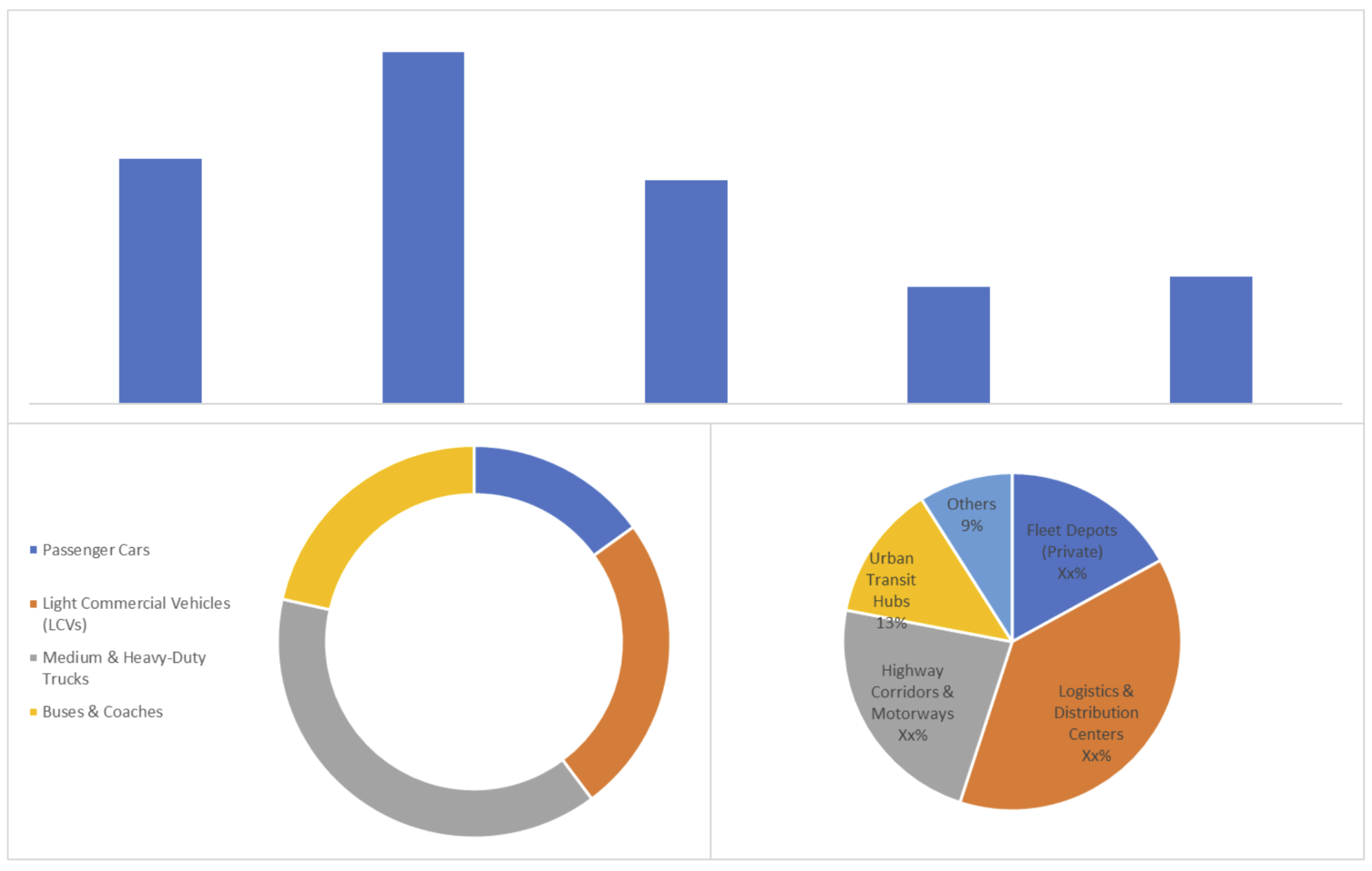
Mini Case Pattern
Pattern: From diligence to cashflow, where this market surprises teams
A fleet-linked urban depot builds around an assumed overnight charging window and a contracted connection capacity that looks adequate on paper. Diligence assumes energization near the charger delivery date and a steady utilization ramp supported by a single anchor fleet. In execution, the site receives a phased connection with an import cap, while tariff structures penalize the early ramp because charging clusters around a narrow window and creates a peak that was not tariff-tested. The friction point is the collision between connection constraints and tariff exposure, which turns “installed” capacity into constrained delivered energy and pushes the operator into hurried operational fixes.
IC implication: underwrite time-to-usable-megawatt and tariff-tested ramp, not installed equipment.
Bank implication: link covenant comfort to energized capacity bands and availability evidence.
Operator implication: invest early in managed charging controls and peak discipline.
Competitive Reality
Competitive advantage is consolidating around execution certainty and operational control rather than pure deployment speed. Players gaining share tend to lock repeatable site acquisition, connection pathways, and service coverage, because those factors reduce variance in energization and uptime and therefore protect early-stage economics. Players losing relevance are often those optimized for hardware deployment who treat grid connection and operational uptime as downstream problems, because that approach leaves value on the table when tariff exposure and downtime become the binding constraints.
Capital and talent are drifting toward integrated operators and delivery platforms that can standardize design, manage interfaces, and prove availability performance, since that is what makes corridor and depot assets financeable at portfolio scale. OEMs benefit where their ecosystems improve uptime, diagnostics, and service responsiveness, but they lose influence when project economics are dominated by grid works and tariff design rather than charger specification.
Strategy pattern table
|
Winning play |
Who uses it (archetype) |
Why it works |
Where it fails |
What signal to watch |
|
Build only where connection scope is explicit and energization is probabilistic within a tight band |
Portfolio investor |
Reduces time-to-revenue variance and stabilizes DSCR |
Over-conservatism can miss upside corridors |
Queue position clarity and energization milestone discipline |
|
Bundle EPC delivery with uptime commitments from day one |
Integrated operator |
Removes build-operate handoff failures that kill availability |
Poor service coverage breaks the promise |
Availability evidence and downtime attribution by cause |
|
Use managed charging as an economic lever, not a technical add-on |
Depot-focused operator |
Protects margins under tariff volatility during ramp |
Weak operational compliance erodes benefits |
Peak coincidence index and controllable load fraction |
|
Standardize design and procurement across a cluster to cut civil and commissioning uncertainty |
Platform builder |
Compresses cycle time and reduces rework |
Local permitting variability breaks standardization |
Commissioning pass-rate proxy and change-order frequency |
|
Treat storage selectively as a tariff and reliability hedge |
Risk-aware operator |
Improves margin resilience when import caps and peaks bite |
Storage used as a marketing asset becomes a cost center |
Margin resilience under tariff stress scenarios |
Key M&A Deals:
-
Total Energies acquired a significant stake or full control in Electra's French fast-charging network (~500 DC points, corridor-focused), accelerating its highway and depot expansion under multi-energy strategy.
-
Shell strengthened its position in IONITY (ultra-fast corridor network across 24 countries), building on earlier alliances to scale high-power charging along major TEN-T highways for passenger and fleet use.
-
Connected Kerb bought Trojan Energy, adding ~1,500 on-street/depot chargers with innovative pavement-level tech, enhancing kerbside and fleet depot capabilities in the UK.
-
BP merged or acquired assets from Electrify America in Europe, boosting its corridor and depot fast-charging footprint across key markets.
-
Enel X Way took stakes or acquired assets in regional corridor and depot operators, expanding high-power charging along Southern European highways and logistics hubs.
Key Private Equity Deals
-
Ares acquired a 20% stake in Eni’s renewable energy and mobility unit, Plenitude, which includes EV charging expansion for corridors and fleet depots (heavy-duty and commercial), supporting bioenergy, renewables, and grid services.
-
KKR made a follow-on investment in Eni’s biofuels and mobility arm, Enilive, targeting sustainable fuels and charging infrastructure for fleet/corridor use, including heavy-duty truck hubs and highway networks.
-
Ardian invested €2.5 billion to acquire Energia Group, an Irish power supplier with renewable assets and EV charging focus, enhancing depot and corridor networks in power-constrained markets like Dublin for fleet and logistics.
-
Sixth Street took a significant minority stake in Sorgenia (Italian energy provider), supporting corridor and depot EV charging expansion alongside renewables and biofuels for commercial fleets.
-
CVC invested in UK-based renewables developer Low Carbon, which includes EV charging infrastructure for C&I depots and corridor-adjacent sites, emphasizing solar/wind + charging hybrids.
Key Development
-
The EU Alternative Fuels Infrastructure Regulation (AFIR) mandated 150 kW+ chargers every 60 km on the TEN-T core network by end-2025 and 350 kW+ MCS (Megawatt Charging System) readiness for heavy-duty vehicles. This triggered a surge: ultra-fast points (>150 kW) grew >60% YoY, reaching 77,000+ by late 2024 and continued expansion.
-
First large-scale electric truck and bus fleet orders (e.g., Hamburg, Brussels, DHL, DB Schenker) accelerated depot charging infrastructure. Milence (Daimler Truck + Shell + TotalEnergies JV) opened multiple 1 MW+ MCS truck corridors in Germany, France, and Benelux. Depot high-power overnight charging (150–400 kW) installations rose sharply, especially in logistics hubs.
-
Germany allocated €6.3 billion (Masterplan Ladeinfrastruktur II) targeting 1 million public points by 2030 with heavy focus on corridor and depot. France launched Charge France (€3 billion for 40,000 ultra-fast points by 2028). EU disbursed €422 million in 2025 for 4,900 new points, plus CEF funding for TEN-T corridor upgrades.
-
Major operators (IONITY, Fastned, Allego, Tesla, BP Pulse, Shell Recharge) expanded “destination-style” highway hubs with 300–400 kW chargers, solar canopies, restaurants, and rest areas. Many new sites integrate on-site battery storage or renewable generation to manage peak demand and grid constraints.
-
Fleet operators and OEMs (e.g., Kia/Hyundai in Netherlands, MAN/Scania truck pilots) tested vehicle-to-grid (V2G) bidirectional charging at depots to provide grid services, reduce energy costs, and support renewable integration. Several EU-funded projects (e.g., FLOW, INCIT-EV) demonstrated commercial viability for bus/truck fleets.
Capital & Policy Signals
Recent capital patterns imply the market is paying for de-risking, not for headline deployment. Funding and partnerships increasingly attach to portfolios that can demonstrate energization readiness, tariff-tested unit economics, and operational uptime discipline, because these are the variables that survive credit committees when utilization is still maturing. Where narratives claim “policy will solve it,” deal terms often tell a different story, with investors requiring stronger downside protection against connection delays and early-stage margin compression.
Policy matters most where it changes bankability rather than ambition. Connection reform, tariff design, and procurement that rewards reliability over connector counts can tighten the spread between forecast and reality, while fragmented permitting and inconsistent grid upgrade ownership keep the connection-to-utilization gap wide. IC teams should discount headline targets unless they translate into repeatable connection cycle time improvements and clearer revenue certainty.
Decision Boxes
IC/Investor Decision Box: Underwriting thresholds that actually move IC memos
When energization dates slip and early utilization ramps wobble, cash yield is driven by time-to-usable-megawatt and tariff-tested margins, which shows up in portfolio variance more than charger procurement savings, so underwriting should prioritize connection risk bands, ramp realism, and uptime evidence over build volume.
Bank Decision Box: What changes DSCR and covenant comfort first
When grid constraints, import caps, or phased connections reduce delivered energy, DSCR tightens before any hardware issue appears, which shows up in covenant sensitivity to energized capacity and availability rather than nominal capacity, so lenders should anchor comfort to energization milestones, downtime attribution, and tariff stress results.
OEM Decision Box: Where specs, retrofits, and compliance budgets really shift
When uptime and power quality become the commercial bottleneck, specification spend shifts toward diagnostics, serviceability, and compatibility with managed charging, which shows up in retrofit demand and service contracts rather than new connectors, so OEMs should follow maintenance coverage signals and operator uptime penalties.
EPC Decision Box: Where delivery risk hides (scope, LDs, commissioning, availability)
When civil works, grid interfaces, and commissioning acceptance criteria are misaligned, schedules stretch and change orders rise, which shows up in repeated rework and delayed energization rather than visible site activity, so EPCs should price interface complexity, align LDs to energization dependencies, and protect commissioning scope.
Operator Decision Box: What breaks in O&M and how it hits availability and opex
When downtime is driven by grid-side constraints, spares logistics, and software-control failures during ramp, availability drops at the exact moment throughput should scale, which shows up in lost sessions and tariff penalties, so operators should invest in fault attribution, spares discipline, and peak-control operations early.
Methodology Summary
This pack builds the forecast from a bottom-up view of depot and corridor charging economics, where site viability is driven by energized capacity, utilization ramp, tariff exposure, and service performance rather than equipment shipment volume. The model separates nominal installed capacity from usable delivered capacity, then applies risk adjustments for connection delays, permitting variability, civil scope uncertainty, and early-stage demand volatility, because these are the variables that most often cause forecast error and underwriting disappointment.
We validate assumptions through triangulation across public policy and regulatory disclosures, grid connection rules and queue signals where available, procurement and tender structures, network tariff design, transport and fleet electrification timelines, and operator performance indicators that can be observed indirectly. Limitations are handled explicitly by using bands, rank orders, and scenario envelopes rather than point estimates when data is not consistent across countries, and by tying each driver and drag to a measurable proxy used inside the Excel pack.
Analyst credibility box
The work is structured like an IC diligence memo, with explicit market boundaries, underwriting variables, and downside cases. The hardest elements to verify consistently are connection queue timing, tariff pass-through details, and true uptime attribution, so the pack uses proxy scoring, sensitivity bands, and cross-checks to reduce false precision.
Limitations box
-
Connection queue timelines can change with local grid upgrade sequencing, so we use delay bands and milestone-based probability tiers.
-
Tariff structures vary by country and can change, so economics are stress-tested under tariff exposure scenarios rather than a single rate.
-
Utilization ramps depend on fleet and driver behavior, so we use ramp archetypes and downside cases.
-
Corridor site performance is sensitive to local competition and travel patterns, so site quality is tiered and tested.
What changed since last update
-
Greater focus on usable capacity and energization milestones as a gating variable in underwriting.
-
Higher emphasis on tariff exposure and peak coincidence as a margin risk during ramp.
-
More separation between depot and corridor archetypes because their risk drivers diverge.
Source Map
-
EU alternative fuels regulation and implementation guidance
-
National transport and energy ministries, incentive schemes, and procurement notices
-
DSO connection rules, published processes, and upgrade responsibility frameworks
-
TSO/DSO planning disclosures where corridor upgrades intersect higher-voltage constraints
-
Network tariff documents and demand charge structures
-
Public tender results for charging hubs, depots, and motorway-adjacent sites
-
Permitting frameworks for civil works, substations, cabling routes, and land access
-
Fleet electrification timelines and public commitments from large operators
-
Observed operator reliability signals, service coverage disclosures, and maintenance frameworks
-
Public disclosures on grid equipment lead times and civil delivery constraints
-
Financial market commentary on infrastructure underwriting variables and covenant focus
-
Interoperability and roaming frameworks affecting demand portability
Why This Reality Pack Exists
Generic reports treat EV charging like a deployment curve with a policy tailwind, but decision teams lose money when energization, tariff exposure, and uptime behave like credit variables rather than operational footnotes. This pack exists to correct the specific blind spot that matters most in Europe: the connection-to-utilization gap that turns installed assets into under-earning assets, and the underwriting adjustments that keep DSCR inside lender comfort while utilization ramps unevenly. A €2000 pack is a rational spend when a single mispriced assumption on energization timing or margin resilience can dominate the difference between an investable portfolio and a stranded build program.
What You Get
-
80–100 slide PDF designed as an IC-ready briefing, with clear market boundary, underwriting variables, and risk-adjusted scenarios.
-
Excel Data Pack
-
20-minute analyst Q&A focused on assumptions, risk bands, and how to interpret the signals for your geography and strategy.
-
12-month major-policy mini-update that flags changes in connection rules, tariff exposure, and incentive mechanics that affect revenue certainty.
Snapshot: EU Depot & Corridor EV Charging Market 2025–2030
-
Installed base grows, but investable capacity tracks energized megawatts and usable power, which shows up in portfolios where commissioning and import limits decide revenue ramps, so underwriting should focus on energization and constraint risk bands.
-
Depot demand is anchored by fleet schedules that force charging outcomes, but economics depend on peak discipline under tariff structures, which shows up in margin volatility during early ramp, so operators should treat managed charging as a financial control, not a technical add-on.
-
Corridor performance is governed by throughput and uptime at specific nodes, which shows up in utilization dispersion between “good” and “average” sites even within the same region, so investors should tier sites by connection clarity, civil risk, and competitive capture.
-
Policy levers matter most when they reduce connection uncertainty or stabilize pricing and reliability expectations, which shows up in tighter variance between plan and actuals, so decision teams should track rule changes that affect energization timelines and tariff exposure, not only subsidy headlines.
-
Operationally, the next five years are about converting build programs into reliable delivered energy, which shows up in the widening valuation gap between assets that can prove uptime and usable capacity and those that cannot, so capital should price execution and operational control as core value drivers.
Sample: What the IC-Ready Slides Look Like
-
One-page IC decision summary that isolates energized capacity, utilization ramp realism, tariff exposure, and uptime as the underwriting levers.
-
Consensus versus reality chart showing installed capacity versus usable delivered capacity using indices and delay bands.
-
Risk and mitigants layout that ties each risk to a measurable proxy, a downside case, and a mitigation that is operationally credible.
-
Opportunity map separating depot and corridor archetypes, with geography pockets expressed as rank-order rather than point claims.
-
Deal-screen criteria slide that banks and IC teams can share, including DSCR sensitivity bands to queue delay and availability.
-
Sensitivity table showing which variables dominate economics, with tariff exposure and time-to-usable-megawatt highlighted.
-
Pipeline heat snippet that focuses on connection readiness and permitting friction signals rather than connector announcements.
Why Purchase This Report?
IC-Defensible Thesis, Not “Market Size”
A decision frame you can take into committee: boundary, base case, and what would change our view.
Evidence Ladder You Can Audit
Artefacts-led (grid offers, tenders, term-sheet structures, warranty language), mapped to what each proves and where it fails.
IRR Kill-Shots and Early Signals
The repeatable ways projects miss IRR (timeline, capex, availability, settlement): plus the first signals that show up before the slide.
Regime Classes and Dominant Variables
Why identical assets underperform in different environments: the one variable that dominates returns by regime (payer, settlement, constraints, curtailment logic.
Table of Contents
Table of contents not available for this report.
Research Methodology
No research methodology information available for this report.
Frequently Asked Questions
Research Grounded in Verifiable Inputs
Our research draws on publicly verifiable inputs including regulatory filings, grid operator data, project announcements, and policy documents across Europe.
These inputs are cross-checked through structured discussions with industry participants to validate what is progressing in practice versus what remains theoretical.
Analyst-Led Research Support
Each report is supported by analysts who focus on specific energy domains and regions. Clients can discuss assumptions, clarify findings, and explore implications with analysts who follow these markets on an ongoing basis
Energy Insights,
Straight to Your Inbox
For People Who Sign Off on Energy Decisions.
Short updates on EU power, grids, storage, and execution risk. No spam, just what matters.
Unsubscribe anytime. No spam, ever.