
Why Waste Heat Recovery Is Becoming Essential for Europe’s AI Data Centres
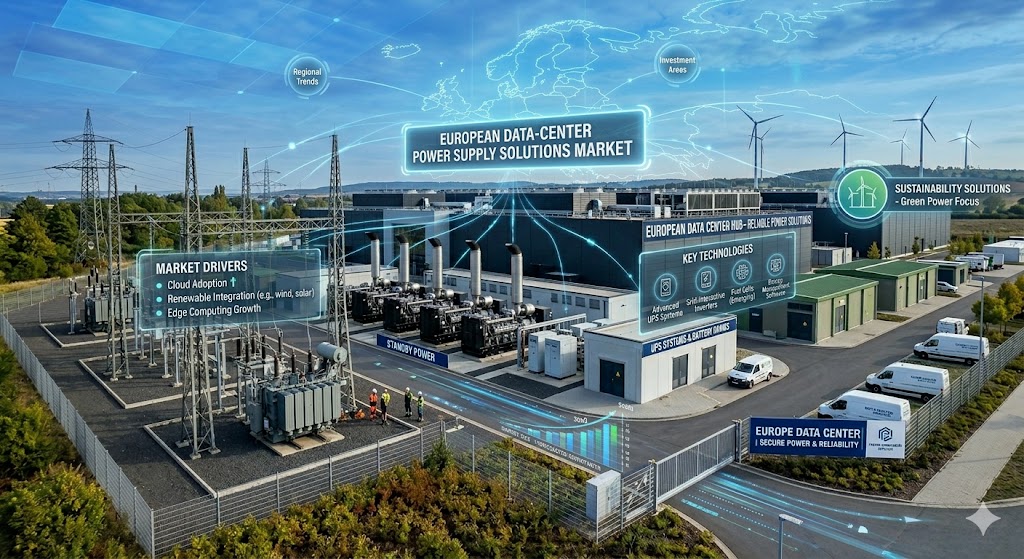
AI Is Changing More Than Computing It Is Transforming Energy Use
Artificial intelligence (AI) is fueling an unprecedented expansion of data centres across Europe. As businesses increasingly adopt generative AI, cloud computing, machine learning, and high-performance computing (HPC), demand for digital infrastructure is growing at an extraordinary pace. New hyperscale data centres are being developed across major European markets, including Germany, France, the Netherlands, Ireland, and the Nordic countries, to support the continent’s rapidly expanding digital economy.
While AI is driving innovation and productivity, it is also significantly increasing electricity consumption. High-performance servers generate substantial amounts of heat that must be continuously removed to maintain feasible and reliable operations. Traditionally, this heat has been treated as waste and released into the atmosphere through cooling systems.
Today, however, Europe is beginning to view waste heat as a valuable energy resource. Waste heat recovery technologies are enabling data centres to capture excess thermal energy and redirect it to district heating networks, industrial facilities, commercial buildings, and residential communities. As Europe pursues ambitious climate targets while expanding its digital infrastructure, waste heat recovery is emerging as one of the most important strategies for improving energy efficiency, reducing emissions, and strengthening the circular energy economy.
AI Workloads are Increasing Heat Generation
Artificial intelligence applications require enormous computing power. Training large AI models, processing real-time analytics, and supporting cloud-based services rely on thousands of high-performance processors operating around the clock.
These processors consume significant amounts of electricity, much of which is ultimately converted into heat. As computing density increases, cooling systems must work harder to maintain optimal operating temperatures for servers and networking equipment.
The rapid expansion of AI infrastructure means that the volume of recoverable waste heat is also increasing. Instead of allowing this energy to dissipate unused, operators are increasingly exploring technologies that convert excess heat into a valuable resource.
This shift is changing how data centres are designed and integrated into Europe's broader energy system.
Waste Heat is Becoming a Valuable Energy Resource
For many years, waste heat generated by data centres was considered an unavoidable byproduct of digital operations. Today, it is increasingly viewed as an opportunity to improve overall energy efficiency.
Heat recovery systems capture thermal energy produced by servers and transfer it through heat exchangers into nearby district heating systems or industrial processes.
The recovered heat can provide space heating, hot water, or process heat for residential neighbourhoods, commercial buildings, hospitals, universities, and manufacturing facilities.
By utilizing energy that would otherwise be wasted, operators improve the overall efficiency of both data centres and local energy systems while reducing dependence on conventional heating fuels.
Supporting Europe's Decarbonization Goals
Heating accounts for a significant share of Europe's overall energy consumption and carbon emissions. Many district heating systems continue to rely partly on natural gas or other fossil fuels.
Waste heat recovered from AI data centres provides a low-carbon alternative capable of reducing emissions without requiring additional fuel consumption.
As renewable electricity increasingly powers data centres, the recovered heat becomes an even cleaner source of thermal energy. This supports Europe's broader decarbonization strategy while improving energy system efficiency.
Governments and municipalities are increasingly encouraging waste heat utilization as part of national climate plans and sustainable urban development initiatives.
District Heating Networks Unlock Greater Value
District heating infrastructure plays a crucial role in maximizing the benefits of waste heat recovery. Countries with well-developed district heating networks can efficiently distribute recovered thermal energy across entire cities.
Instead of constructing separate heating systems for individual buildings, centralized networks transport hot water generated from multiple energy sources, including recovered data centre heat.
Several European cities are already integrating data centre waste heat into local heating systems, reducing fossil fuel consumption while improving energy resilience.
As district heating networks continue expanding and modernizing, opportunities for large-scale waste heat utilization are expected to increase significantly.
Advanced Cooling Technologies Improving Heat Recovery
Modern cooling technologies are making waste heat recovery more efficient than ever before.
Liquid cooling systems, direct-to-chip cooling, immersion cooling, and high-temperature cooling solutions capture heat more effectively than conventional air-cooling systems. These technologies produce higher-quality thermal energy that is easier to reuse for external applications.
Artificial intelligence also optimizes cooling operations by continuously monitoring temperatures, airflow, equipment performance, and workload distribution.
Together, advanced cooling and intelligent energy management improve both computing efficiency and heat recovery performance.
Economic Benefits for Data Centre Operators
Waste heat recovery offers financial as well as environmental advantages. Instead of treating excess heat as an operational challenge, operators can transform it into an additional revenue opportunity.
Supplying recovered heat to district heating companies, industrial users, or commercial buildings creates new income streams while improving overall facility efficiency.
Heat recovery also strengthens corporate sustainability performance by reducing operational carbon emissions and supporting environmental, social, and governance (ESG) objectives.
As investors increasingly evaluate sustainability performance, waste heat utilization is becoming an important competitive advantage within Europe's rapidly growing Data-Center Power Supply Solutions Market.
AI and Smart Energy Management Maximizing Efficiency
Artificial intelligence is helping operators optimize waste heat recovery alongside overall energy management.
AI-powered platforms continuously analyse server utilization, cooling demand, weather forecasts, electricity prices, and heating network requirements to determine the most efficient operating strategy.
Machine learning algorithms coordinate cooling equipment, pumps, heat exchangers, and energy storage systems in real time, ensuring that the maximum amount of usable thermal energy is recovered.
This intelligent optimization improves both data centre efficiency and the performance of connected heating networks.
Challenges Limiting Wider Adoption
Despite growing momentum, several barriers continue to affect waste heat recovery deployment. Not every data centre is located close to district heating infrastructure or industrial heat consumers.
Building new heat distribution networks requires significant investment and long-term planning. Seasonal variations in heating demand may also reduce utilization during warmer months.
Technical integration between data centres and municipal heating systems requires close coordination among utilities, local governments, and infrastructure developers.
Standardized regulations, supportive policies, and continued investment will be essential for expanding waste heat recovery across Europe.
Looking Ahead: Waste Heat Will Become Part of Europe's Energy System
As AI continues driving rapid growth in digital infrastructure, Europe is increasingly recognizing that data centres should not be viewed solely as electricity consumers. Instead, they are becoming integrated components of the broader energy ecosystem.
Future data centres are expected to combine renewable electricity, battery storage, AI-powered energy management, flexible grid participation, and waste heat recovery within highly efficient digital energy hubs.
Cities planning new district heating systems are also increasingly considering nearby data centres as long-term sources of sustainable heat.
This integration will help improve energy efficiency, reduce carbon emissions, strengthen energy security, and support Europe's transition toward a circular and low-carbon economy.
Conclusion
The rapid expansion of AI data centres is creating new opportunities to improve Europe's energy efficiency through waste heat recovery. By capturing and reusing thermal energy that would otherwise be lost, data centres can support district heating networks, reduce fossil fuel consumption, generate additional revenue, and contribute to climate goals.
Supported by advanced cooling technologies, artificial intelligence, renewable electricity, and expanding district heating infrastructure, waste heat recovery is becoming an essential component of Europe's sustainable digital economy. As AI adoption continues to accelerate, recovering and utilizing waste heat will play a vital role in building a more efficient, resilient, and low-carbon energy system.