
The Role of Nuclear Energy in Europe’s Net-Zero and Energy Independence Strategy
Introduction
As Europe advances toward its ambitious climate goals, policymakers face the dual challenge of achieving net-zero emissions while ensuring a secure and reliable energy supply. The European Union has committed to becoming climate-neutral by 2050, requiring a fundamental transformation of its energy system. While renewable energy sources such as wind and solar are expected to play a leading role in this transition, their intermittent nature creates challenges for maintaining grid stability and meeting growing electricity demand.
At the same time, recent geopolitical tensions and energy supply disruptions have highlighted the importance of reducing dependence on imported fossil fuels. In this context, nuclear energy is increasingly being recognized as a strategic asset that can support both decarbonization and energy independence objectives. By providing reliable, low-carbon electricity generation, nuclear power is emerging as a key component of Europe’s long-term energy strategy.
Nuclear Energy and Europe’s Net-Zero Ambitions
Achieving net-zero emissions requires a significant reduction in greenhouse gas emissions across all sectors of the economy. The electricity sector is at the center of this transformation because decarbonized power generation is essential for supporting the electrification of transportation, heating, and industrial processes.
Nuclear energy offers one of the lowest carbon footprints among large-scale electricity generation technologies. Unlike coal and natural gas plants, nuclear reactors produce electricity without direct carbon dioxide emissions during operation. This makes nuclear power an effective tool for reducing emissions while maintaining reliable electricity supply.
As Europe continues to phase out coal-fired generation and limit dependence on fossil fuels, nuclear energy provides a stable source of low-carbon electricity that complements renewable energy deployment. Many policymakers view nuclear power as an important contributor to achieving the EU’s climate objectives while ensuring that decarbonization efforts do not compromise energy reliability.
Providing Reliable Baseload Power
One of nuclear energy’s greatest advantages is its ability to provide continuous baseload electricity generation. Baseload power refers to the minimum level of electricity demand that exists at all times and must be met regardless of weather conditions or time of day.
Unlike wind and solar power, which depend on natural conditions, nuclear reactors operate consistently and can generate electricity around the clock. Modern nuclear power plants often achieve capacity factors above 90%, making them among the most reliable electricity sources available.
As renewable energy penetration increases across Europe, maintaining a stable and balanced electricity grid becomes increasingly important. Nuclear energy provides a dependable foundation that supports grid reliability while reducing the need for fossil-fuel-based backup generation. This reliability is particularly valuable as electricity demand continues to rise due to electrification and digitalization trends.
Supporting Renewable Energy Integration
Contrary to the perception that nuclear and renewable energy compete with each other, many energy experts now view them as complementary technologies. A successful net-zero energy system will likely require a combination of renewable generation and reliable low-carbon power sources.
Nuclear power helps balance fluctuations in renewable electricity output by providing a stable supply of energy when wind speeds are low or solar production declines. This reduces the risk of power shortages and minimizes dependence on carbon-intensive backup generation.
Advanced grid technologies, energy storage systems, and flexible reactor designs are further improving the ability of nuclear facilities to operate alongside renewable energy resources. Together, nuclear and renewables can create a resilient and diversified energy system capable of meeting Europe’s climate goals while maintaining energy security.
Strengthening Europe’s Energy Independence
Energy independence has become a major policy priority for Europe in recent years. The continent’s historical reliance on imported fossil fuels has exposed economies to supply disruptions, price volatility, and geopolitical risks.
Nuclear energy offers a pathway toward greater energy self-sufficiency by reducing dependence on imported natural gas, coal, and oil. Nuclear power plants require relatively small amounts of fuel compared to fossil-fuel facilities and can store fuel supplies for extended periods, enhancing resilience against supply chain disruptions.
Many European governments are increasingly viewing nuclear power as a strategic asset that contributes to national and regional energy security. By expanding domestic low-carbon electricity generation, countries can reduce exposure to international energy market fluctuations while improving long-term supply stability.
This growing emphasis on energy security is one of the key reasons behind Europe’s renewed interest in nuclear investment.
Life Extensions and New Nuclear Investments
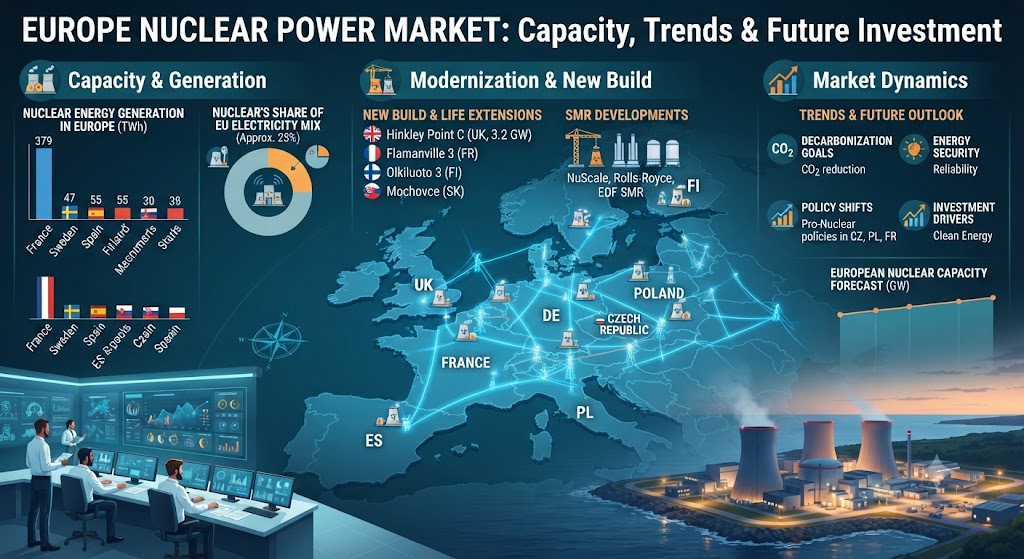
To support net-zero and energy security objectives, many European countries are extending the operational life of existing nuclear reactors. Life-extension programs involve safety upgrades, modernization initiatives, and infrastructure improvements that allow reactors to continue operating beyond their original design lifespan.
These projects provide a cost-effective method of preserving large amounts of low-carbon generation capacity while avoiding the emissions associated with fossil-fuel alternatives.
In addition to extending existing assets, several countries are investing in new nuclear projects. Nations such as France, Poland, Hungary, and the Czech Republic are exploring reactor construction programs to strengthen future electricity supply. Small Modular Reactors (SMRs) are also attracting attention as a flexible and potentially more affordable alternative to traditional large-scale nuclear plants.
Together, these investments are expected to play a significant role in Europe’s evolving energy landscape.
Challenges Facing Nuclear Expansion
Despite its advantages, nuclear energy faces several challenges. New nuclear projects require substantial upfront investment and often involve lengthy planning and construction timelines. Financing large-scale projects can be difficult, particularly in competitive electricity markets.
Public concerns regarding nuclear safety, radioactive waste management, and environmental impacts continue to influence policy debates in some countries. Regulatory approvals and permitting processes can also extend project development schedules.
Additionally, the rapid decline in renewable energy costs has intensified competition within the power sector. To remain attractive, nuclear developers must focus on improving efficiency, controlling project costs, and demonstrating strong safety performance.
Addressing these challenges will be essential for ensuring the successful expansion of nuclear power within Europe’s energy mix.
Future Outlook: Nuclear as a Pillar of Europe’s Clean Energy Future
Looking ahead, nuclear energy is expected to remain an important part of Europe’s strategy for achieving net-zero emissions and strengthening energy independence. Rising electricity demand, growing renewable energy deployment, and increasing concerns about grid reliability are likely to reinforce the value of stable low-carbon generation.
Advances in reactor technology, including Small Modular Reactors and next-generation nuclear systems, could further enhance the sector’s competitiveness and flexibility. Continued policy support and investment will be critical for enabling the development of new projects and maintaining existing capacity.
As Europe works toward a secure, sustainable, and decarbonized energy future, nuclear power is poised to play a central role in supporting long-term energy resilience and climate objectives.
Conclusion
Nuclear energy is becoming an increasingly important component of Europe’s net-zero and energy independence strategy. By providing reliable low-carbon electricity, supporting renewable integration, and reducing reliance on imported fossil fuels, nuclear power offers significant advantages in addressing some of the continent’s most pressing energy challenges.
While obstacles related to cost, public acceptance, and project development remain, ongoing investments in reactor life extensions, new-build projects, and advanced nuclear technologies demonstrate the sector’s growing importance. As Europe accelerates its energy transition, nuclear power will continue to serve as a critical pillar of a secure, resilient, and sustainable energy system.