
EU Nuclear Power Market Trends: Life Extensions, New Builds & Energy Security
Introduction
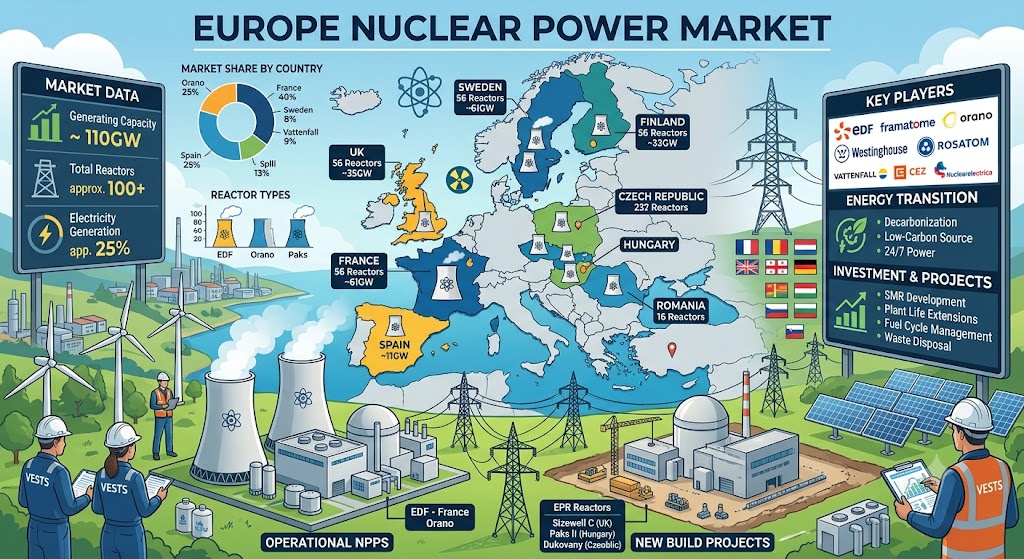
Nuclear power is once again gaining prominence in Europe’s energy landscape as governments seek reliable, low-carbon electricity sources to support decarbonization and energy security goals. While renewable energy continues to expand rapidly across the European Union, concerns about grid stability, energy independence, and rising electricity demand are driving renewed interest in nuclear generation. The energy crisis triggered by geopolitical tensions and disruptions in fuel supplies has further highlighted the importance of maintaining a diversified and resilient power mix.
As a result, several European countries are extending the operational life of existing reactors, investing in new nuclear power plants, and exploring advanced reactor technologies. These developments are reshaping the EU nuclear power market and positioning nuclear energy as a key pillar of Europe’s long-term energy strategy.
Nuclear Energy’s Strategic Role in Europe’s Energy Transition
Europe has committed to ambitious climate targets, including achieving net-zero greenhouse gas emissions by 2050. Meeting these goals requires large-scale deployment of low-carbon electricity generation technologies. While wind and solar power are expected to provide a significant share of future electricity supply, their intermittent nature creates challenges for grid operators.
Nuclear power offers a unique advantage because it provides stable, weather-independent electricity generation with minimal carbon emissions. Unlike renewable energy sources that fluctuate based on weather conditions, nuclear plants can operate continuously and deliver reliable baseload power. This makes nuclear energy an important complement to renewable generation and helps ensure grid stability as Europe transitions toward a cleaner energy system.
In addition, nuclear energy supports energy security by reducing dependence on imported fossil fuels and strengthening domestic electricity production capabilities.
Life Extension Programs: Maximizing Existing Nuclear Assets
One of the most significant trends in the EU nuclear market is the extension of operating lifetimes for existing reactors. Many European nuclear plants were originally designed to operate for 30 to 40 years, but technological upgrades and safety improvements are allowing operators to extend their lifespan by several additional decades.
Life extension programs are often more cost-effective than building new generation capacity and provide immediate access to reliable low-carbon electricity. Countries such as France, Finland, Belgium, Hungary, and the Czech Republic are investing heavily in modernization projects to maintain reactor performance and meet evolving safety standards.
France, which operates the largest nuclear fleet in Europe, is undertaking major refurbishment initiatives to ensure reactors remain operational well into the coming decades. These investments are helping preserve a significant source of low-carbon electricity while supporting national energy security objectives.
As electricity demand continues to grow, life extension projects are expected to remain a key strategy for maintaining Europe’s nuclear generation capacity.
New Nuclear Build Projects Gain Momentum
Alongside reactor life extensions, several European countries are pursuing new nuclear construction projects to strengthen long-term electricity supply. Rising energy demand, coal phase-outs, and decarbonization commitments are encouraging governments to invest in next-generation nuclear infrastructure.
Countries in Central and Eastern Europe are particularly active in expanding nuclear capacity. Poland, for example, has announced plans to develop its first commercial nuclear power plants as part of its strategy to reduce coal dependence. Other nations, including Hungary, Romania, Slovakia, and Bulgaria, are also exploring reactor expansion projects.
Growing political support for nuclear power across several EU member states is creating renewed momentum for new-build investments.
Small Modular Reactors Transforming the Future Market
Small Modular Reactors (SMRs) are emerging as one of the most promising innovations in Europe’s nuclear sector. Unlike conventional large reactors, SMRs are designed to be smaller, modular, and easier to deploy.
The modular approach allows components to be manufactured in factories and assembled on-site, potentially reducing construction costs and project risks. SMRs also offer greater flexibility and can be deployed in regions where large-scale nuclear plants may not be economically viable.
As commercialization progresses, SMRs could significantly reshape the European nuclear power market during the next decade.
Energy Security Driving Nuclear Investment
Energy security has become a major driver behind Europe’s renewed interest in nuclear energy. Recent geopolitical developments and disruptions in global energy markets exposed vulnerabilities associated with heavy reliance on imported fuels.
Governments increasingly view nuclear energy as a strategic asset capable of enhancing energy independence and strengthening resilience against future supply disruptions. This perspective has encouraged policymakers to include nuclear power in long-term energy planning frameworks.
The growing focus on energy security is expected to remain one of the strongest factors supporting nuclear investment across Europe.
Challenges Facing the EU Nuclear Market
Despite positive market momentum, the nuclear sector continues to face several challenges. High capital investment requirements remain one of the biggest barriers to new project development. Large nuclear plants require substantial upfront funding and often involve long construction timelines.
Regulatory approvals, licensing processes, and public acceptance can also influence project progress. Concerns regarding radioactive waste management and nuclear safety continue to generate debate in some European countries.
In addition, competition from increasingly cost-competitive renewable energy and battery storage technologies is placing pressure on nuclear project economics. To remain attractive, the industry must continue improving efficiency, controlling construction costs, and demonstrating strong operational performance.
Addressing these challenges will be critical for sustaining long-term growth in the European nuclear sector.
Future Outlook: Nuclear’s Growing Role in Europe’s Energy Mix
The future outlook for nuclear power in Europe remains increasingly positive. As countries seek reliable low-carbon electricity sources, nuclear energy is expected to remain an important component of the continent’s power generation portfolio.
Life extension programs will help preserve existing capacity, while new-build projects and Small Modular Reactors will support future growth. At the same time, rising electricity demand from electric vehicles, heat pumps, and industrial electrification will strengthen the need for dependable baseload power generation.
Nuclear energy is also expected to work alongside renewable energy sources, creating a balanced and resilient electricity system capable of meeting both climate and energy security objectives.
Conclusion
The EU nuclear power market is entering a new phase of growth driven by reactor life extensions, new-build projects, and increasing concerns about energy security. As Europe continues its transition toward a low-carbon economy, nuclear energy is being recognized as a reliable source of clean, stable electricity that complements renewable generation.
Although challenges related to costs, regulation, and public perception remain, ongoing investments in modernization and advanced reactor technologies are strengthening the sector’s long-term prospects. With energy security and decarbonization becoming increasingly important priorities, nuclear power is poised to play a central role in Europe’s future energy landscape.