
Hydrogen, Flow Batteries & Thermal Storage: The Future of LDES in Europe
Introduction
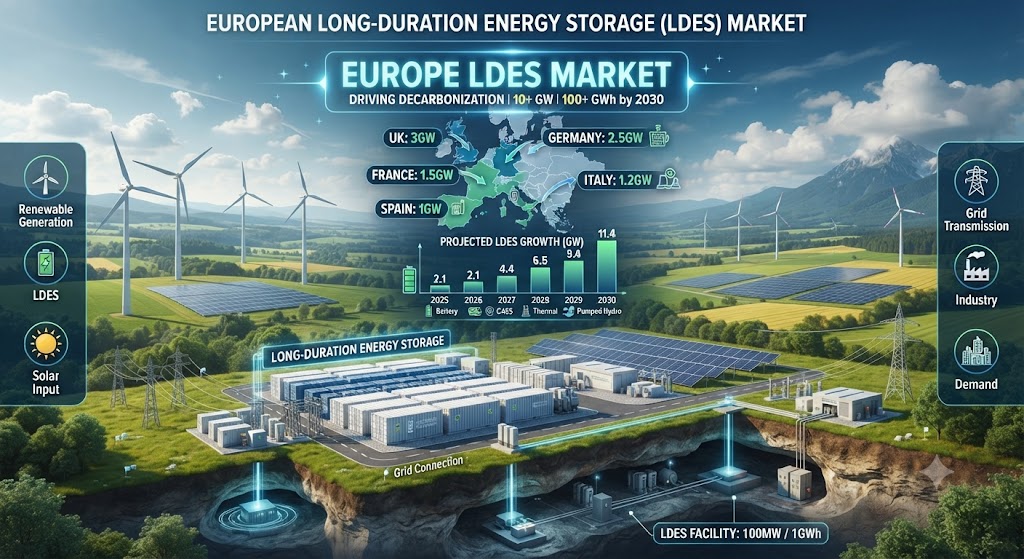
As Europe accelerates its transition toward a low-carbon energy system, renewable energy sources such as wind and solar are becoming increasingly dominant in the electricity mix. While these technologies are essential for achieving climate goals, their intermittent nature presents a significant challenge for grid operators. Periods of high renewable generation often produce excess electricity, while periods of low generation can create supply shortages. To bridge this gap and ensure reliable power delivery, Europe is increasingly turning to Long-Duration Energy Storage (LDES).
Unlike conventional lithium-ion batteries that typically provide energy for a few hours, LDES technologies can store energy for extended periods ranging from several hours to multiple days or even weeks. Among the most promising solutions are hydrogen energy storage, flow batteries, and thermal energy storage systems. These technologies are expected to play a crucial role in enabling deeper renewable integration and strengthening Europe’s energy security.
Why Europe Needs Long-Duration Energy Storage
Europe's renewable energy capacity is growing rapidly, driven by ambitious climate targets and energy independence objectives. Countries such as Germany, Spain, Denmark, and the Netherlands are investing heavily in solar and wind power generation. However, renewable output often does not align perfectly with electricity demand.
This mismatch creates challenges including grid congestion, renewable curtailment, and increasing price volatility. While short-duration battery systems help manage hourly fluctuations, they are insufficient for addressing prolonged periods of low renewable generation. Long-duration storage is therefore becoming essential for balancing seasonal and multi-day energy imbalances.
LDES enables excess renewable electricity generated during high-production periods to be stored and used when needed, ensuring a stable and reliable energy supply while reducing dependence on fossil-fuel backup generation.
Hydrogen Energy Storage: Europe’s Seasonal Storage Solution
Hydrogen is widely considered one of the most promising long-duration storage technologies for Europe’s future energy system. During periods of excess renewable generation, electricity can be used to power electrolyzers that split water into hydrogen and oxygen. The resulting green hydrogen can then be stored for extended periods and later converted back into electricity through fuel cells or gas turbines.
One of hydrogen's biggest advantages is its ability to provide seasonal energy storage. Unlike batteries, which are generally optimized for shorter durations, hydrogen can store large quantities of energy for weeks or even months. This makes it particularly valuable for addressing seasonal fluctuations in renewable generation.
Hydrogen storage also offers flexibility beyond the power sector. Stored hydrogen can be used in industrial processes, transportation, and heating applications, creating multiple revenue streams and supporting broader decarbonization efforts across Europe.
Flow Batteries: Delivering Flexible Long-Duration Storage
Flow batteries are emerging as a strong contender in the LDES market due to their scalability, long lifespan, and safety advantages. Unlike conventional batteries that store energy within solid electrodes, flow batteries store energy in liquid electrolytes contained in external tanks.
A major advantage of flow batteries is their ability to independently scale power and energy capacity. This flexibility allows operators to increase storage duration simply by expanding electrolyte storage tanks, making them well-suited for applications requiring several hours to multiple days of energy delivery.
Flow batteries also experience less degradation compared to lithium-ion systems and can withstand a significantly higher number of charge-discharge cycles. Their improved safety profile and long operational life make them attractive for utility-scale renewable integration and grid-support applications.
As Europe seeks durable and sustainable storage solutions, flow batteries are expected to play an increasingly important role in supporting renewable-heavy power systems.
Thermal Energy Storage: Unlocking Industrial Decarbonization
Thermal energy storage (TES) is another promising technology gaining attention within Europe’s LDES market. These systems store excess energy in the form of heat or cold, which can later be used for electricity generation, industrial processes, district heating, or cooling applications.
Thermal storage technologies utilize materials such as molten salts, water, rocks, or advanced phase-change materials to retain energy efficiently over long periods. One of the key advantages of thermal storage is its ability to support sectors that are difficult to electrify directly, particularly heavy industry.
Europe’s industrial sector accounts for a substantial share of energy consumption and carbon emissions. Thermal storage systems can help reduce fossil fuel use in industrial heating applications while improving overall energy efficiency. They also provide a cost-effective method for storing renewable energy at scale, making them an important component of future energy infrastructure.
Key Market Drivers Accelerating LDES Adoption
Several factors are driving investment in hydrogen, flow batteries, and thermal storage technologies across Europe. Growing renewable energy deployment is creating an increasing need for long-duration flexibility solutions. At the same time, governments and policymakers are recognizing the importance of energy storage in achieving climate and energy security objectives.
Supportive funding programs, innovation initiatives, and regulatory reforms are encouraging technology development and commercialization. Rising concerns about grid resilience, energy independence, and electricity market volatility are also strengthening the business case for long-duration storage investments.
Furthermore, declining technology costs and improvements in system efficiency are expected to accelerate adoption throughout the remainder of the decade.
Challenges Facing LDES Technologies
Despite their significant potential, hydrogen, flow batteries, and thermal storage technologies still face several challenges. High upfront capital costs remain one of the biggest barriers to large-scale deployment. Many projects require substantial investment before achieving commercial viability.
Technology maturity also varies across different solutions. While some applications have demonstrated strong performance, broader commercialization and scaling efforts are still underway. Regulatory uncertainty and limited market mechanisms for valuing long-duration flexibility can further impact project economics.
Infrastructure requirements, permitting complexities, and integration challenges must also be addressed to unlock the full potential of these technologies across Europe.
Future Outlook: Building Europe’s Long-Duration Storage Ecosystem
The future of Europe’s energy transition will depend heavily on the successful deployment of long-duration energy storage technologies. Hydrogen storage, flow batteries, and thermal energy storage each offer unique advantages that address different aspects of renewable intermittency and grid flexibility.
Rather than competing directly, these technologies are likely to complement one another within a diversified energy storage ecosystem. Hydrogen may serve seasonal storage needs, flow batteries may support multi-hour grid balancing, and thermal storage may decarbonize industrial heat demand.
By 2030 and beyond, continued innovation, supportive policies, and increased investment are expected to accelerate deployment across all three technologies. Together, they will play a critical role in creating a resilient, flexible, and fully decarbonized European energy system.
Conclusion
Hydrogen, flow batteries, and thermal energy storage represent the next generation of long-duration energy storage solutions that will support Europe’s renewable energy future. As solar and wind generation continue to expand, these technologies will help overcome intermittency challenges, enhance grid reliability, and strengthen energy security.
While obstacles related to cost, regulation, and commercialization remain, ongoing technological advancements and growing market support are positioning LDES as a cornerstone of Europe’s clean energy transition. The coming decade will be pivotal in determining how these innovative storage solutions reshape the continent’s energy landscape.